
Active Warrants in Covington County
An active warrant in Covington County is process the issuing authority has not recalled, quashed, served, or closed. It is a status inside a file. Nothing gets posted to a website here, and that gap shapes every check a resident can make. The companion term, outstanding, means the holding agency still treats the matter as unresolved. Two offices can describe the same warrant in different words on the same afternoon for exactly that reason. Ask each one what its own file shows.
What the Covington Sheriff Confirms About Warrants
For law enforcement process, the first call is the Sheriff's Office at 601-765-8281. The sheriff serves Covington County warrants and runs the jail, so custody questions land there. It cannot speak for a city court, a Chancery order, a corrections hold, or a federal matter. Its official page lists the office on Main Street in Collins, with phone and fax lines, but no search tool.
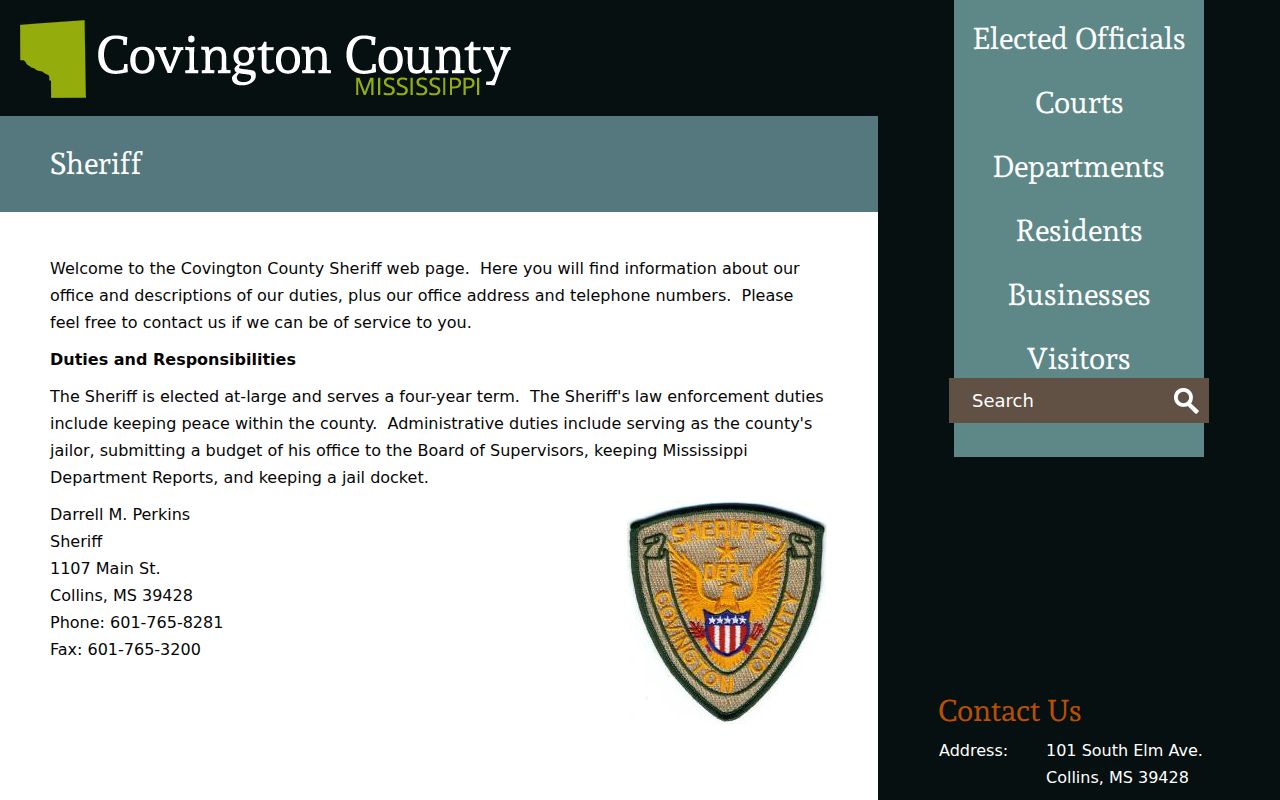
Call with specific questions. Ask whether a hold is recorded, which court entered it, and whether a case number can be released. Ask what the office advises about surrender. A sealed, juvenile, or investigative matter may stay out of the answer entirely. Note: Get the name and title of whoever answers, since a later call about the same Covington County warrant may reach a different deputy.
How the Covington County Active Warrant List Works
There is no list. The Covington County sheriff posts no warrant roster, no jail roster, and no county dashboard of outstanding warrants, and no office publishes a count either. Treat any total quoted elsewhere as unverified. What stands in its place is a set of separate files with no shared update schedule. Justice Court records its own process, each town court records its own, and the circuit clerk records felony filings. Nothing refreshes on a published cadence, so there is no update time to watch and no roster worth checking twice. Note: With no cadence published, ask each clerk directly when a recent order should appear in that office's own file.
Covington Warrant Lists Versus Court Dockets
Three different products get confused for one another in Covington County: warrant lists, dockets, and tip pages. Only one of them exists locally.
| Product | What It Would Show | Covington Status |
|---|---|---|
| Full active warrant search | A broad set of records under a name query | None located |
| Curated most wanted page | A small selected group published for tips | None located locally |
| Electronic court docket | Case filings and status flags in eligible cases | Available, paid, circuit cases only |
A docket flag is the closest thing to a public warrant signal in Covington County, and it still takes a clerk to interpret. A curated tip page is not a warrant search at all. Note: Mistaking a tip page for a full warrant search is the error that sends people home believing they are clear.
What an Active Warrant Shows
With no local entry open for inspection, the useful approach is a set of status questions. Put them to the Covington County office holding the file. Ask for a plain answer to each one.
| Current status | Active, served, returned, recalled, or quashed |
|---|---|
| Entering agency | Which office put the process into its own system |
| Controlling court | The judge who can lift, reset, or recall it |
| Hold type | County process, a corrections hold, or another jurisdiction's detainer |
| Next action | Payment, a new setting, bond, a motion, or surrender |
The status "returned" deserves special care in Covington County. It records only that a return event was filed, which is not the same as cleared.
Covington Dockets Are Not Warrant Lists
Circuit cases in Covington County run through Mississippi Electronic Courts, and access there is a paid account rather than a public list. Registration costs $10 a year. The payment screen is the last step before the account works.
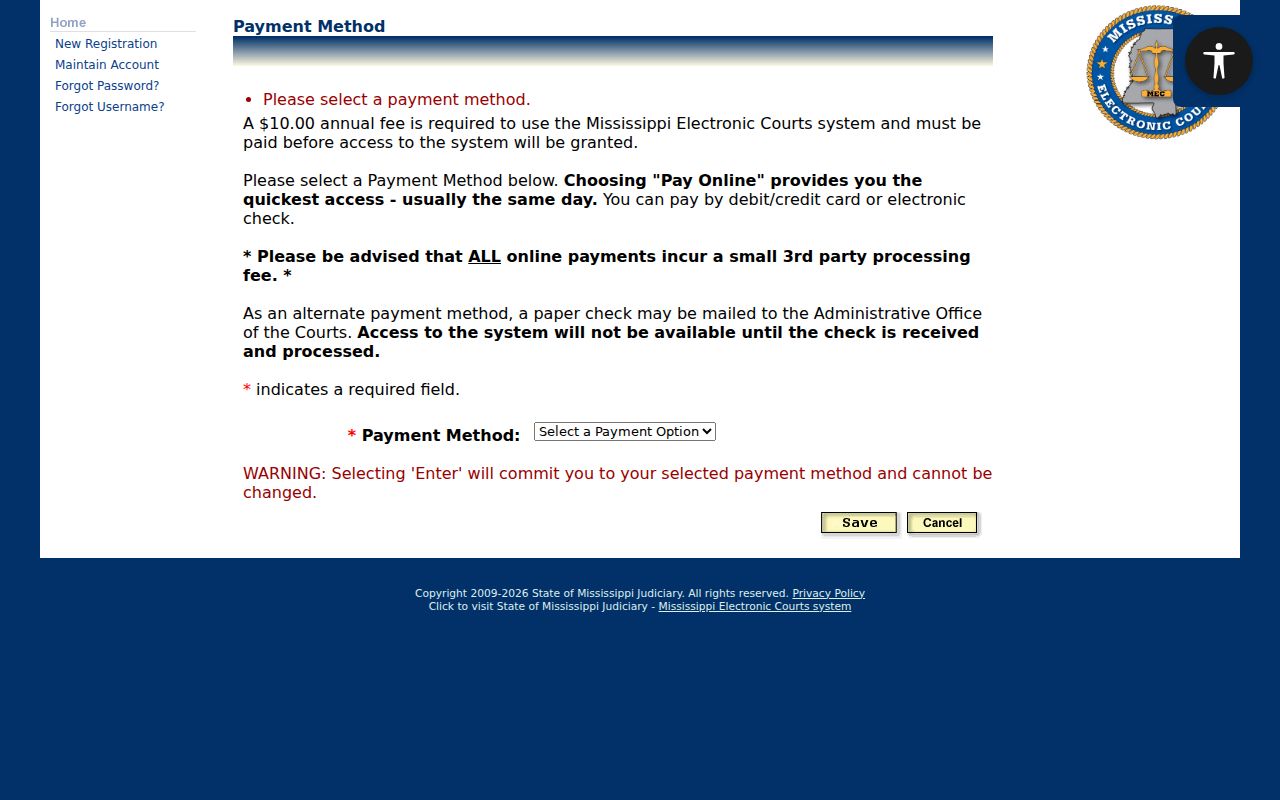
The registration route accepts card, electronic check, and mailed check, and usage then bills at twenty cents a page. The account buys docket material in participating courts. It does not scan Covington County for open warrants, and it never reaches a Justice Court or town court file.
Most-Wanted Lists and Warrant Roundups
Covington County runs no most wanted page, warrant roundup, or amnesty event. The sheriff and the towns publish none. Similar programs sit at the state and federal level, and those are tip channels rather than county warrant databases.
Key Rules:
The Mississippi Bureau of Investigation Special Operations division coordinates the state's most wanted fugitives program.
The U.S. Marshals Southern District of Mississippi runs the Gulf Coast Regional Fugitive Task Force with federal, state, and local partners.
Those pages are linked, never copied. Names, photographs, and roster entries stay on the agency site where they belong.
More on how those programs work sits on the Covington County most wanted page.
A Missing Listing Clears No Covington Warrant
Silence is not clearance. A name that surfaces nowhere online proves only that nothing was published, and Covington County publishes nothing to begin with. Only the issuing court can confirm, recall, or quash a warrant.
A clerk who finds nothing has searched one office's files. Recent entries, sealed cases, juvenile matters, town court process, corrections holds, and out of state warrants can all sit outside that answer.
If Your Name Is on the List
Learning that process exists is the moment to slow down, not to drive to a counter. Call the issuing clerk first. Ask what the judge requires, and ask whether counsel should arrange the appearance. The resolving steps, including bond and recall questions, sit in the what to do section of the county overview. Do not assume a walk-in stays a conversation. A voluntary appearance can still end in booking, which is why the call comes before the trip. Note: Ask the clerk to confirm any court order in writing, then call back after the file is updated to hear the Covington County status again.
Two Covington Courts, Two Warrant Answers
Plan for this in Covington County. A town clerk shows an open matter while the sheriff shows none, or a circuit docket carries a flag the clerk calls historical. Neither office is wrong; they keep separate files.
- Write down exactly what each office said, with the date and the person's title.
- Ask the office showing process for the entering agency and the controlling judge.
- Ask the office showing nothing whether its answer covers only its own records.
- Take the open matter to its issuing court, since that court alone can lift it.
- Recheck both offices after the court acts, because no shared update exists.