
Municipal Court Warrants in Covington County
Municipal courts in Covington County hear city traffic, state law misdemeanors, and local ordinance cases. Miss a setting or ignore an order, and the city judge can enter bench warrant process in the town's own file. The record stays municipal. Each town keeps its own clerk, case numbers, and calendar, so someone with tickets in two towns has two separate problems to close, and no shared index ties them together. Note: Ask which town issued the citation first, since three separate municipal warrant files exist inside this one county.
Collins Warrants and the Covington Courthouse
Collins runs Covington County's most fully documented city court, and it works from two addresses. The clerk's administrative office sits at 202 Arrington Avenue, open weekdays from 8:00 a.m. to 5:00 p.m. at 601-765-1657.
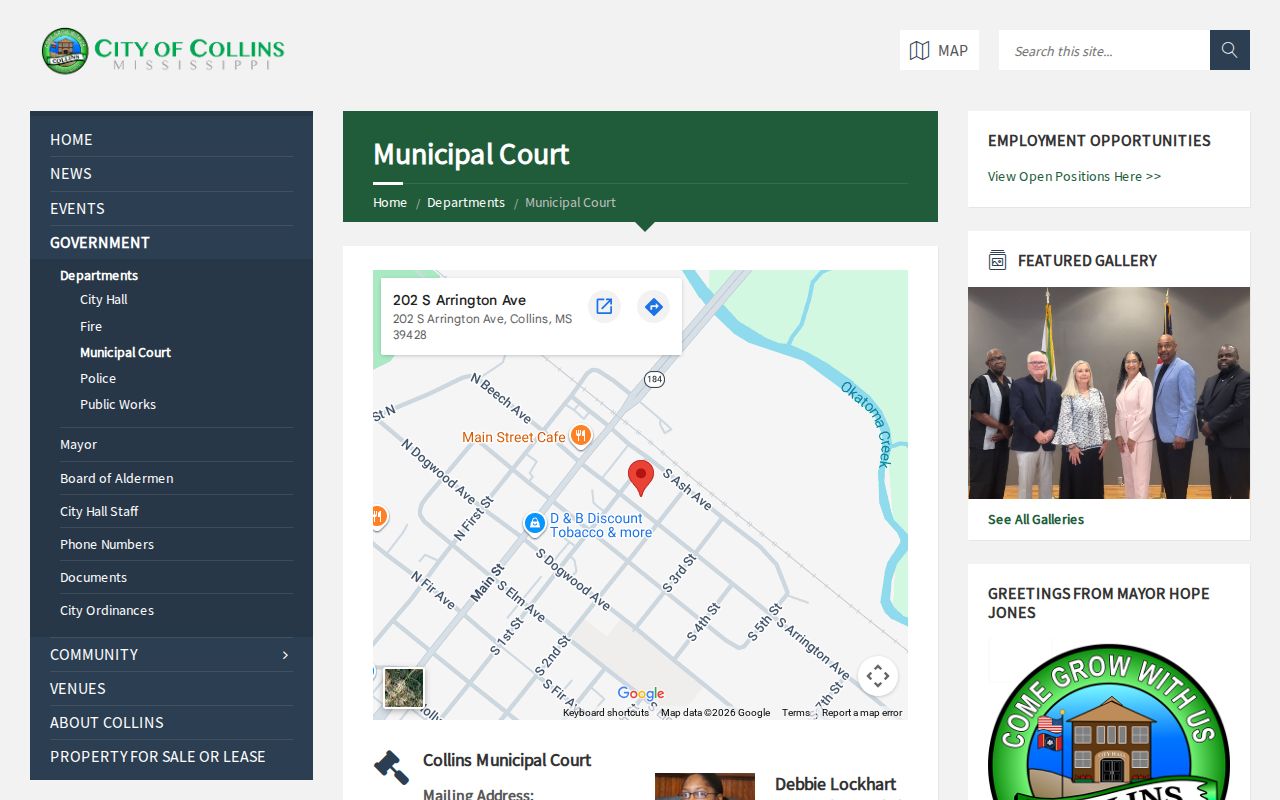
The city court page names the people behind the bench: clerk Debbie Lockhart, judge Bobby Wayne Mooney, prosecutor Jon Alan Buffington, and public defender Reggie Blackledge. Sessions fall on the second and fourth Tuesday of each month except recognized holidays, held at the Covington County Courthouse on South Dogwood Avenue rather than the Arrington office.
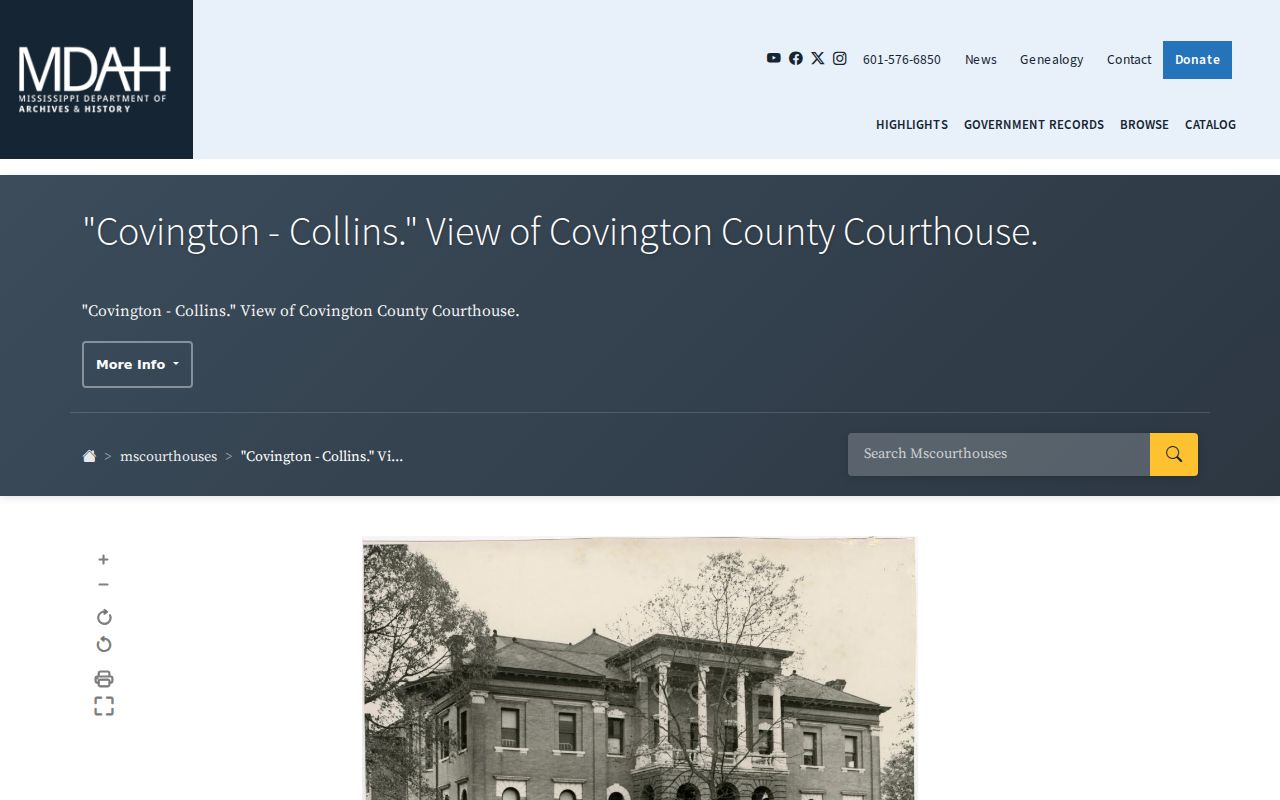
State archives list the 1907 courthouse as a Mississippi Landmark since 1985 and a National Register entry since 1991. The building still hosts Covington County court sessions today.
Which Covington County Cities Have Municipal Courts
All three incorporated places in Covington County run a municipal bench. Published detail varies sharply. One town posts staff names, another almost nothing.
| City | Municipal Court | Warrant Types | Phone |
|---|---|---|---|
| Collins | Office at 202 Arrington Avenue, sessions at the courthouse | City traffic, state law misdemeanors, building and ordinance cases | 601-765-1657 |
| Mount Olive | Clerk listed at 510 Main Street | Town traffic, misdemeanors, ordinances | 601-797-3496 |
| Seminary | Contact published through the state municipal directory | Town traffic, misdemeanors, ordinances | 601-722-9426 |
None of the three towns publishes a warrant lookup, a citation portal, or a bond schedule. Note: Call during weekday business hours, because a small Covington County court office may have one clerk covering the warrant files.
Mount Olive Warrant Calls in Covington County
Mount Olive posts its court contacts on the town's police department page. The department sits at 510 Main Street. Its phone is 601-797-3232, the nonemergency number is 601-765-0005, and Chief Calvin Robinson works from the same address. Court staff appear there too. Municipal Court Clerk Jamia Walker takes calls at 601-797-3496, judge Bobby Wayne Mooney is listed with 601-765-6581, and Alan Buffington serves as prosecutor. The page offers no search box, payment form, or walk-in schedule, so the clerk's line is the working channel for any warrant question in that corner of Covington County. For department matters use the nonemergency line, never 911 for a routine warrant status call, a habit worth keeping across Covington County.
How to Check a Municipal Court Warrant
City files in Covington County are small enough that a clerk can usually answer in one call. Have the citation details ready before dialing.
- Call the city clerk named on the ticket and give the citation number and date.
- Ask whether a failure to appear was entered and whether the judge signed warrant process.
- Ask what the court now requires: payment, a reset, an appearance, or a motion.
- Ask which agency would serve the order, since city police and county deputies split that work.
- Send a written Public Records Act request to the city if the phone answer is incomplete.
- Call the Sheriff's Office at 601-765-8281 only for custody or county service questions.
Covington's Smallest Town Warrant Route
Seminary is the smallest incorporated place in Covington County, and it posts no current town court or police webpage. The state's official municipal government directory fills the gap. It lists P.O. Box 295, Seminary, phone 601-722-9426, fax 601-722-9428, clerk Charlotte Dunn, and judge Bobby Mooney. Which agency serves process today remains an open question. Ask the town clerk which department writes and serves Seminary papers now, and confirm with the sheriff if the answer points to the county.
What a Municipal Court Warrant Shows
City courts in Covington County publish no sample warrant entries. Ask a clerk to confirm these fields from the paper file.
| City case or citation number | The town's own identifier, separate from any county number |
|---|---|
| Charge | Traffic, misdemeanor, or an ordinance violation |
| Missed setting | The date the court recorded as a failure to appear |
| Process entered | Bench warrant or other order signed by the city judge |
| Amount owed | Fine and costs; no city publishes a warrant fee schedule |
| Current status | Open, recalled, served, or satisfied |
A city file may also point to a county agency if custody ever occurred. The clerk can explain that connection.
City Warrants Skip Covington County Systems
No official city source in Covington County says municipal warrants flow to the sheriff's records, the electronic court system, or a state agency. Assume the opposite. A clean answer from the sheriff says nothing about a Collins, Mount Olive, or Seminary file, and a circuit docket search will not reach one either. The reverse also holds: a town clerk cannot confirm a county or felony matter. Each file must be checked where it lives. That same separation shapes the boundaries of the county's published most wanted and fugitive program. Check the town first. Turn to the county desks only if custody or county service enters the picture.
Resolving a Municipal Court Warrant
Only the city judge who signed the order can lift it. Ask the clerk the practical questions. Is payment allowed, can a new setting be scheduled, does a bond apply, and should an attorney appear first? Collins publishes payment methods for court fines but does not say paying lifts existing process. Mount Olive and Seminary publish no payment terms at all. A caller in Covington County should get the answer from the town rather than assume it.
Ask the clerk when the file will show the action and get written confirmation, since no city publishes an update schedule for its own records.
One Judge, Three Covington Warrant Benches
One man wears several robes here. Bobby Wayne Mooney serves as municipal judge for Collins, Mount Olive, and Seminary. Covington County also lists him as one of two Justice Court judges, serving alongside Billy Pitts. That does not merge the files. Every court keeps its own clerk, calendar, and case records. So even when the same judge signed two orders, a caller still has to reach the right clerk to check on a warrant. A city ticket moves through one office. A county citation, covered on the Covington County traffic warrant page, takes an entirely separate path. Note: Ask for the clerk by court name rather than by the judge, since the judge's name shows up in several places across the county.